

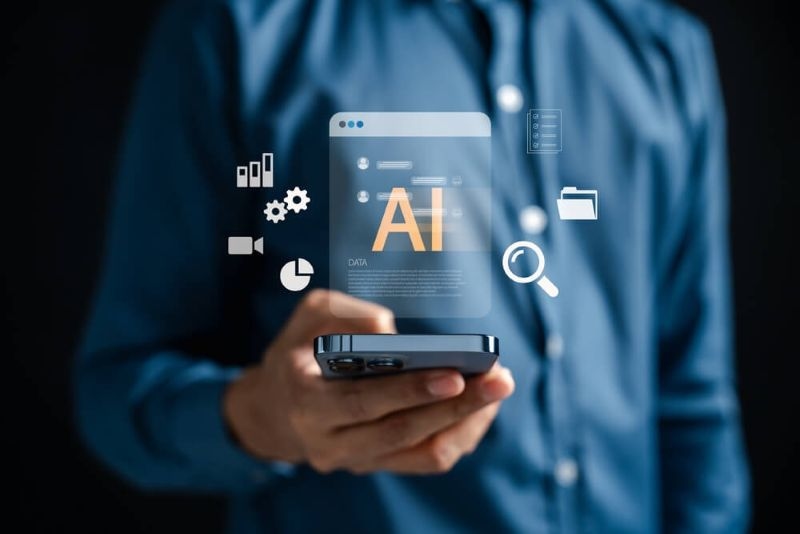
Artificial intelligence applications are no longer hidden ideas or lab tests. They are part of daily work, homes, phones, and even small habits people barely notice. At first look, artificial intelligence applications connect AI use cases, practical AI tools, and everyday AI examples in ways that feel normal, not complex. Here’s the thing: AI in business is not magic or fear-based talk; it is mostly about using software that learns patterns and repeats tasks better over time. What this really means is that an AI implementation guide helps teams understand where to start and how to keep control.
This article breaks it down slowly, using simple words, short ideas, and real explanations that feel human and useful.
Artificial intelligence applications are systems that can learn from data, spot patterns, and make decisions with limited human help. These systems do not think like people, but they work fast and stay consistent.
Here is how artificial intelligence applications usually work
Artificial intelligence applications appear in phones, offices, shops, and schools. Many everyday AI examples already exist, such as spelling suggestions and photo sorting. These are small but powerful AI use cases that people trust without thinking much.
AI use cases differ by need, not by business size. A small store and a large company both rely on similar logic, just applied differently.
Popular AI use cases include
AI use cases help reduce mistakes and save time. In AI in business settings, these systems often handle repetitive tasks, allowing people to focus on planning and creativity. Every day, AI examples like email spam filters show how long AI use cases have already been trusted.
Practical AI tools are software products built to solve specific tasks, not impress anyone. These tools fit into daily work without forcing new habits.
Examples of practical AI tools include
Practical AI tools matter because they reduce effort. In AI in business, these tools improve speed and accuracy. Many everyday AI examples, such as voice typing, also fall under practical AI tools because they solve one clear problem well.
Artificial intelligence applications play a quiet yet significant role in business operations. They are used for planning, tracking, and improving outcomes.
Key areas where AI in business is applied
What this really means is that AI in business supports decisions, not fully replaces them. Artificial intelligence applications still need human review. AI use cases in business grow best when teams start small and learn slowly.
Every day, AI examples show how artificial intelligence applications blend into everyday life. Most users do not call them AI, yet they rely on them daily.
Common everyday AI examples include
These everyday AI examples build trust over time. They prove that AI use cases can be helpful without being complicated. Practical AI tools often begin as everyday AI examples before moving into business use.
An AI implementation guide is essential because it keeps projects focused and safe. Without guidance, artificial intelligence applications can fail or confuse.
A simple AI implementation guide includes
AI implementation guide steps help align AI with business goals and real needs. AI use cases succeed when teams understand limits. Practical AI tools perform better when expectations are realistic.
Artificial intelligence applications are helpful, but they are not perfect. Problems usually come from misuse or poor setup.
Common challenges include
These issues affect AI's trustworthiness in business. An AI implementation guide helps reduce risks. Every day, AI examples sometimes give wrong suggestions, which remind users that human judgment still matters.
Ethics play a significant role in artificial intelligence applications. Responsible design protects users and builds confidence.
Ethical practices include
AI use cases must respect users. Practical AI tools should follow rules and laws. AI in business grows stronger when trust is protected through honest use.

Practical AI tools continue to evolve slowly, not suddenly. Most changes focus on ease, clarity, and control.
Expected improvements include
Every day, AI examples will keep expanding. Artificial intelligence applications will feel more natural, not louder. AI implementation guide methods will remain key for stable growth.
With so many options, how do you pick? Focus on what you need. Read reviews from people who do similar work. Most good tools offer a free trial or a basic free version. Use that. See if it fits into your current routine without causing more headaches.
Look for tools that explain things clearly. If you need a week of training to get started, it may be too complex for your current needs. The best tools feel intuitive and solve a clear pain point.
Presently, AI primarily serves to increase an organization's efficiency by automating many routine business functions. However, many current AI applications may also help individuals manage their personal lives. Generally speaking, the most important aspect of adopting AI is first recognizing a significant business pain point and then finding an efficient AI application. You will also need to increase your familiarity with various AI systems by experimenting with them. As you do so, you will be able to take advantage of the advancements made possible by AI technology by utilizing them in conjunction with the appropriate application framework.
A writing assistant or a simple AI image generator is often the easiest start. They usually have a simple box where you type what you want, making the interaction very straightforward.
Most experts see AI changing jobs more than deleting them. It tends to automate repetitive tasks, allowing people to focus on those that require human judgment, creativity, and empathy.
Many practical AI tools use a monthly subscription model, often starting from just a few dollars per user. The cost is usually much lower than hiring for a new full-time position to handle the automated task.
For most common cloud-based AI applications, no. The companies that make the tools have done the complex data science work. You just use the finished product through a website or app, much like using any other software.
This content was created by AI