

The usual way to build digital trust has always involved a central authority—like how a bank signs off on payments, a government keeps track of ownership, or a big platform monitors user accounts. It works, but there’s a catch: everything leans on that one central database. If it crashes, gets hacked, or just has a bad line of code, a lot of people feel the pain.
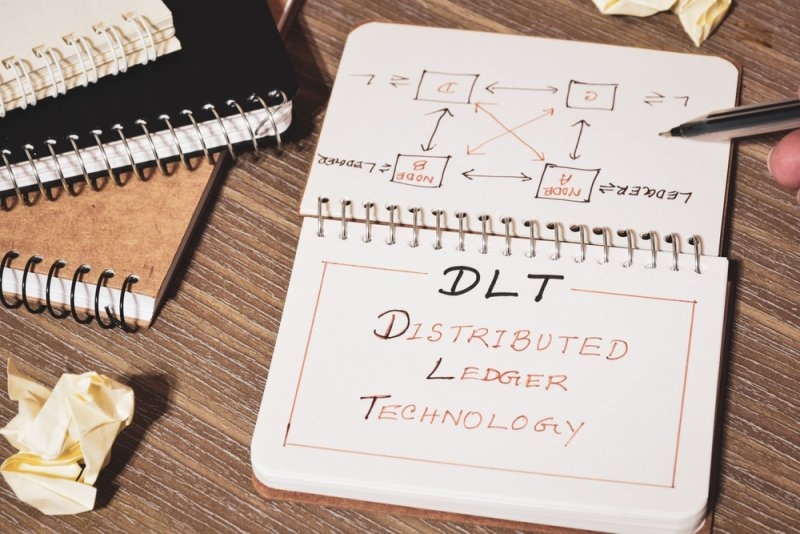
Distributed ledger technology (DLT) flips that idea. Instead of making one database handle everything, DLT spreads out the work. Different people or organizations keep their own copies of the records and constantly check that everyone’s version matches. It doesn’t automatically make every system secure or honest, but it really changes where and how you handle trust and verification. We’ll get into how DLT works, where blockchain comes in, and why handing out those trust responsibilities to everyone is shaking up what we mean by “digital trust.”
With distributed ledger technology, records aren’t stored in one place. They live across lots of computers or organizations—no single authority runs the show.
Why does this matter? Because digital trust is built on good records—you need everyone to agree on what’s real. If several independent parties can verify the same transaction history, changing one copy alone is not enough.
A distributed ledger can therefore reduce disputes between organizations. Think about supply chains. A manufacturer, shipping company, warehouse, and retailer may all need the same shipment information. Instead of repeatedly reconciling separate databases, they can work from a shared record.
Traditional databases are usually controlled by an administrator. That administrator can be necessary, but it also becomes a central point of control. With a decentralized ledger, authority can be distributed across participants.
Different systems use different levels of decentralization, so the term should not be treated as meaning “no authority exists.” The real change is shared verification.
Blockchain technology is the best-known form of distributed ledger technology, but the two terms are not interchangeable. A blockchain stores transactions in linked blocks, typically creating a chronological chain. Other distributed ledger systems can organize information differently.
This distinction matters because businesses sometimes assume every DLT project needs a cryptocurrency or public blockchain. It doesn’t.
A financial consortium, for example, may use a permissioned network where only approved institutions can participate. A public blockchain has a very different trust model.
| Feature | Traditional Database | Distributed Ledger | Blockchain |
|---|---|---|---|
| Control | Usually centralized | Shared | Often distributed |
| Record copies | Usually limited | Multiple participants | Multiple network participants |
| Verification | Administrator | Network rules | Consensus process |
| Alteration | Controlled by authorized users | Governed by network design | Usually difficult after confirmation |
| Typical use | Internal records | Multi-party coordination | Transactions and shared records |
The useful question is not which model sounds newer. It is which model fits the trust problem.
So, how does blockchain work without one central database owner? A transaction is first proposed to the network. Participants check new transactions using set rules, and the network has to agree on what gets accepted. That’s where consensus comes in. Once something gets the green light, it’s added to the ledger, following how the blockchain is structured.
Cryptography keeps everything secure. Hashing stamps the data with its own digital fingerprint, and digital signatures show who actually approved a transaction.
This creates an important distinction. Blockchain does not prove that every piece of information is true. It can help prove that recorded information was authorized and has not been changed under the system’s rules.
A consensus mechanism is the process used by network participants to agree on the valid state of the ledger. Different networks do this in their own way. With Proof of Work, you’ve got computers solving tough problems. Proof of Stake relies on people putting up real value as a sort of guarantee for playing fair. Permissioned systems may use voting or other agreement models.
The choice affects speed, cost, energy use, security assumptions, and governance. There is no universal winner.
Don't Miss: Machine Learning Basics in Simple Terms to Help Beginners
The strongest effect of distributed ledger technology is not simply faster transactions. It is the change in verification. In a traditional arrangement, Company A may send records to Company B, which checks them against its own database. If one version of the records doesn’t match the others, someone steps in to figure out what went wrong.
Using distributed ledgers means everyone shares the same transaction history. That cuts down on all the back-and-forth checking and reconciliations that usually happen.
Take shipping pharmaceuticals, for example. A manufacturer records dispatch, a logistics provider records movement, and a distributor records receipt. If these events are added to a shared ledger, each authorized participant can verify the sequence. That can make audits cleaner.
Blockchain technology is useful where several parties need a shared record but do not fully trust one another. Financial transactions are an obvious example. Digital identity, asset tracking, certificates, intellectual property records, and supply chains can also benefit when shared verification has clear value.
A company should not add blockchain merely because it sounds secure. There needs to be a real coordination problem. If one organization already owns the entire process and participants trust that organization, a normal database may be cheaper and simpler.
A decentralized ledger does not mean governance disappears. Someone still decides who can participate, how rules change, what happens during disputes, and how compromised credentials are handled.
This is where many DLT discussions become too optimistic.
A well-designed distributed ledger technology system needs clear governance alongside technical controls. Everyone involved needs to know what they’re responsible for. They have to manage who gets to see or change the records, and they can’t ignore keeping the software up to date.
Having records spread out like this helps keep things honest, but privacy gets tricky. You can’t just dump sensitive personal details onto a public ledger forever. That can cause legal headaches or just plain operational messes.
So, a lot of systems keep the private stuff somewhere else, and only add proofs or references to the ledger itself. Security also depends on private keys, identity controls, software quality, and participant behavior. The ledger itself is only one layer.
Also Read: How Automation Tools are Helping Businesses Save More Time?
Looking ahead, DLT isn’t really about replacing every database on the planet. It’s about picking the right moments where shared verification actually makes a difference. Blockchain will keep grabbing headlines, but other types of ledgers are important too. Consensus models will keep getting smarter. People are getting better at protecting privacy. Businesses are learning to be picky, only choosing decentralization when it’s an actual win.
The bigger story here is how we think about trust. It doesn’t have to rest on one organization and one unbreakable database. Distributed ledgers let different parties double-check the same history—if they all play by the same rules.
Absolutely. You can use a distributed ledger to track business deals, ownership changes, supply chains, certificates—pretty much any kind of information—without touching crypto. A lot of businesses use “permissioned” systems, which don’t need any digital currency at all.
That depends on how the network’s set up. Most of the time, if one player exits, everyone else still has their own copies, so you don’t lose the history. Good governance rules will lay out exactly how these changes get handled.
Some DLT setups lock records in for good once they’re confirmed—changing or deleting them is nearly impossible. Some enable a few edits and/or cuts if necessary. It all comes down to how the system’s built, the rules people agree to, and what kind of privacy is required.
Not on its own. Distributed ledger technology (DLT) can shake up how we verify records and transactions, but banks and governments aren’t going anywhere. They still have to defend the law, ensure that the rules are being complied with and that things are working properly and according to the plan.
It can require a serious investment. You need to pay for software, servers, security, integration, good governance, and getting everyone set up. DLT makes financial sense only when you’ve got a real trust problem that a regular database can't handle as well.
This content was created by AI